
 Guide
Guide
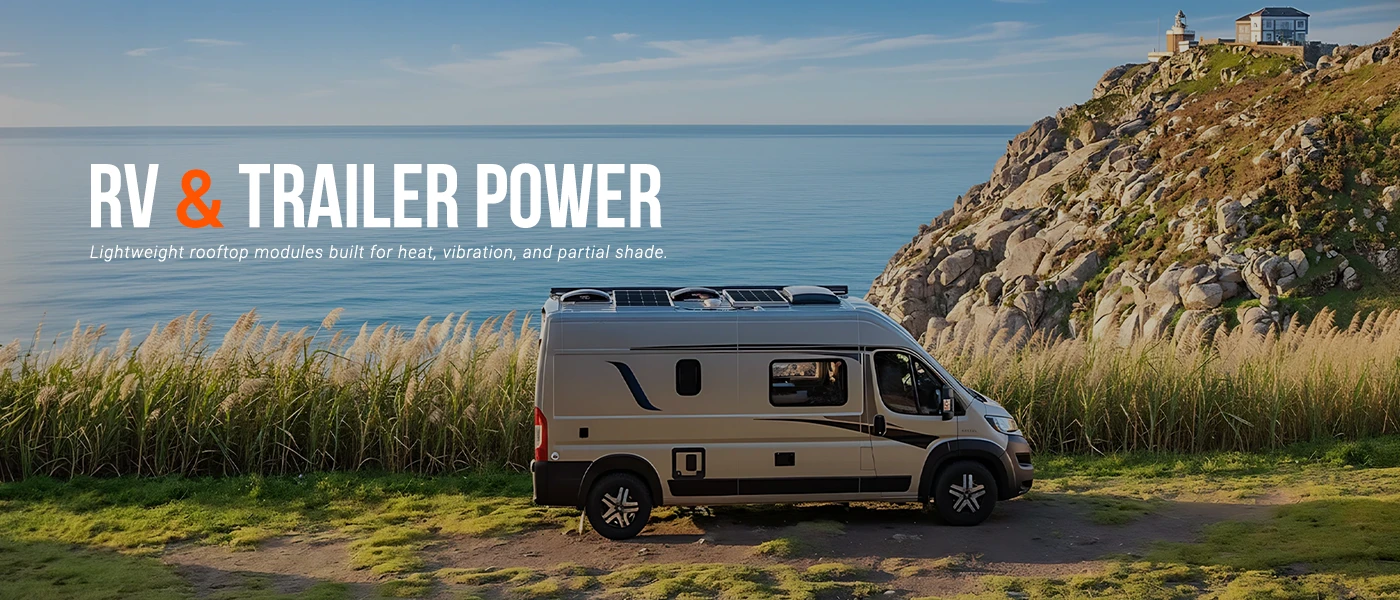
How to Choose the Right Solar Panel for Your RV
A comprehensive guide to selecting the best solar panel for your RV.
Read MoreStep‑by‑step guidance on installing solar panels on boats and yachts, including waterproofing, wiring, and maximizing sun exposure on the water.
Marine solar installations provide quiet, maintenance‑free power for house batteries, navigation equipment, refrigeration, and entertainment systems. Unlike generators, solar panels produce no noise, no fumes, and require minimal ongoing maintenance.
Not all solar panels are suitable for marine environments. Key requirements include:
Flexible panels can be adhered directly to fiberglass or aluminum decks using marine‑grade adhesive. This provides a low‑profile installation with no penetration through the deck.
Rigid panels mounted on stainless steel rails can be tilted to optimize sun angle. This mounting method is ideal for sailboats with limited flat deck space.
Flexible panels can be sewn or zip‑tied to bimini tops and dodgers, utilizing existing canvas structures without permanent modifications.
All marine electrical connections should be made using heat‑shrink terminals and marine‑grade tinned copper wire. Use waterproof junction boxes and MC4 connectors with silicone sealant for added protection.
A well‑planned marine solar installation can significantly extend your time on the water without shore power. By choosing the right panels, mounting method, and wiring practices, you can build a reliable solar system that performs for years in harsh marine conditions.
Guide
A comprehensive guide to selecting the best solar panel for your RV.
Read More Industry
Explore emerging trends in flexible photovoltaic technology.
Read More Guide
Guide
Everything you need to know about building an off-grid solar system.
Read More