
 Guide
Guide
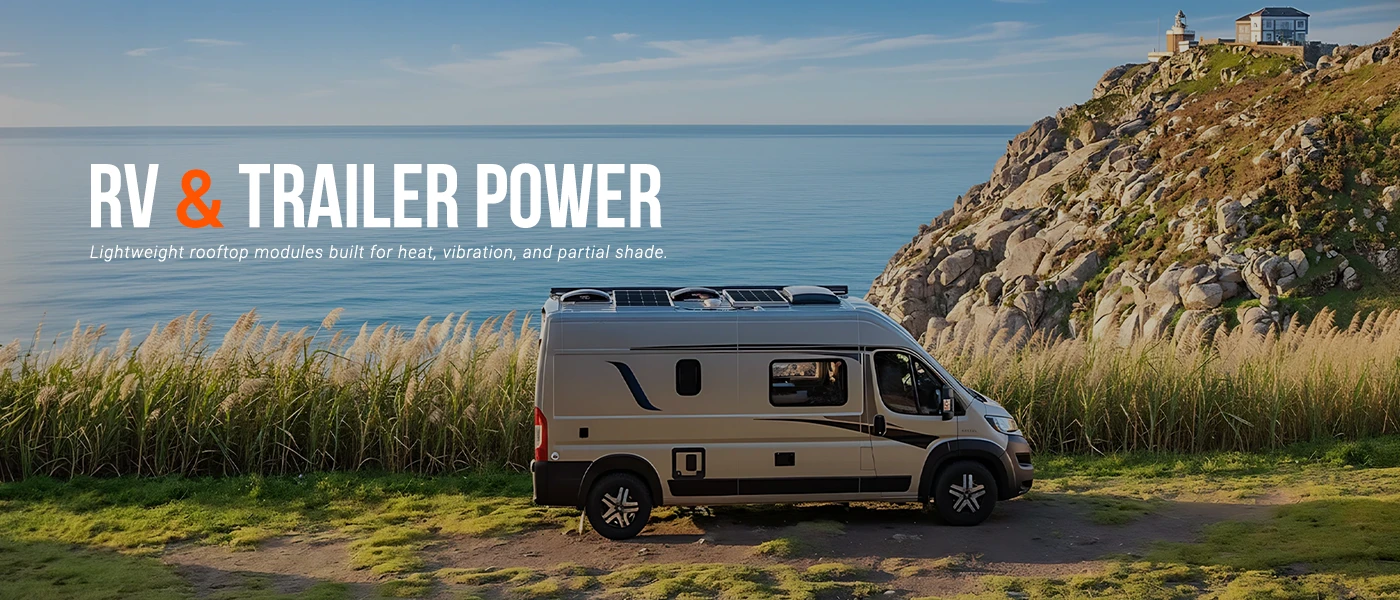
How to Choose the Right Solar Panel for Your RV
A comprehensive guide to selecting the best solar panel for your RV.
Read MoreEverything you need to know about building an off-grid solar system: sizing your array, selecting batteries, inverters, and charge controllers.
An off-grid solar system operates independently of the utility grid, generating and storing all the electricity you need. These systems are essential for remote cabins, RVs, boats, and any location where grid connection is unavailable or impractical.
The heart of your system. Choose between monocrystalline (highest efficiency), polycrystalline (good value), or thin-film (flexible mounting). Calculate your total wattage needs and add 20% overhead for system losses and cloudy days.
Batteries store energy for use when the sun isn't shining. Lithium iron phosphate (LiFePO4) batteries are the gold standard for off-grid systems, offering 3,000-5,000 charge cycles, high depth of discharge (80-90%), and zero maintenance.
The charge controller regulates the voltage and current from the solar panels to the batteries. MPPT (Maximum Power Point Tracking) controllers are 15-30% more efficient than PWM controllers, especially in cold or cloudy conditions.
The inverter converts DC power from your batteries to AC power for household appliances. Pure sine wave inverters are recommended for sensitive electronics. Size your inverter to handle the maximum simultaneous load plus a 25% safety margin.
Building an off-grid solar system requires careful planning and proper component selection, but the result is energy independence and reliable power anywhere the sun shines. Start with a clear understanding of your power needs, and don't hesitate to consult with a solar professional for complex installations.
Guide
A comprehensive guide to selecting the best solar panel for your RV.
Read More Guide
Guide
Step-by-step guidance on installing solar panels on boats and yachts.
Read More Industry
Discover the top solar industry trends driving innovation and market growth.
Read More